OEMs achieve the best pressure vessel durability cost balance by focusing on total cost of ownership, not just upfront price, using the right materials, smart design optimization, and strong quality control. Moderate investments in durability consistently reduce downtime, maintenance, and lifecycle costs while improving reliability and competitiveness.
Achieving Optimal Pressure Vessel Durability Cost Balance for OEMs
In industrial manufacturing, pressure vessels represent a critical investment that directly impacts operational efficiency, safety, and long-term profitability. For Original Equipment Manufacturers (OEMs), striking the right pressure vessel durability cost balance isn’t just a financial decision – it’s a strategic one affecting competitive positioning and customer satisfaction. Finding this balance ensures systems perform reliably while maintaining cost-effectiveness throughout their lifecycle.
Understanding the Durability-Cost Relationship in Pressure Vessels
The relationship between pressure vessel durability and cost follows a predictable pattern: increased durability typically requires greater upfront investment. However, this fundamental tradeoff isn’t as straightforward as it might first appear.
The initial purchase price represents only a fraction of the total lifecycle cost. Vessels designed purely for low upfront cost may require frequent maintenance or fail prematurely, creating greater expenses through downtime and repairs. Conversely, over-engineered vessels can tie up capital unnecessarily, disrupting the optimal cost balance.
Balanced approaches consistently outperform both extreme cost-cutting and excessive over-engineering. By analyzing application requirements and expected service life, manufacturers can identify the sweet spot where additional durability investments deliver meaningful returns without excessive cost. OEM systems create unique considerations in this balance, as OEMs must consider not only manufacturing costs but also how vessel performance affects overall system reliability and warranty claims.
Key Factors Affecting Pressure Vessel Durability and Cost
Material Selection and Its Impact
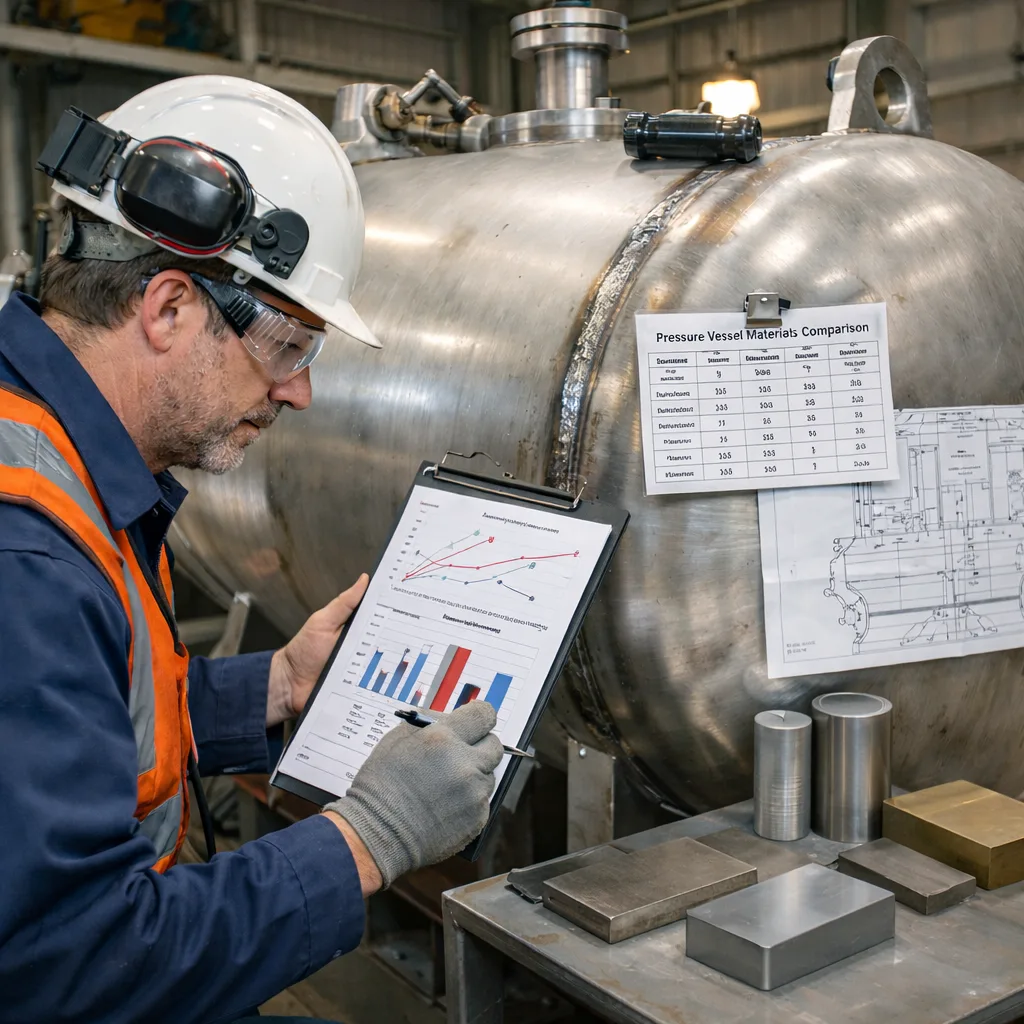
Material choice creates perhaps the most visible tradeoff. Carbon steel offers the lowest initial cost for basic applications. Stainless steel costs more but provides superior corrosion resistance, enhancing durability. Specialty alloys represent the highest cost tier but may be necessary for extreme conditions.
Material certification adds another layer of consideration. Higher certification levels provide greater assurance but add expense. For critical applications, certifications prevent catastrophic failures, making them worth the investment.
Higher-cost materials often reduce total lifecycle expenses. A stainless steel vessel in a corrosive environment may cost twice as much initially, but last three to four times longer, creating substantial long-term savings when factoring in replacement and downtime.
Design Optimization Strategies
ASME code compliance establishes minimum safety requirements, but creative engineering can meet these standards while minimizing material usage. Techniques like optimal head designs and strategic reinforcement placement can reduce costs while maintaining required pressure ratings.
Modern computational tools enable sophisticated optimization. FEA software allows engineers to simulate vessel performance, identifying areas where material can be reduced without compromising pressure vessel durability. These virtual tests save both material and prototyping costs.
Vessel geometry significantly impacts both durability and expense. Simpler geometries generally cost less to manufacture but may require thicker walls. Finding the optimal geometry for specific operating conditions often unlocks cost savings and durability improvements.
Manufacturing Process Considerations
Welding represents a critical junction of quality and cost. Automated processes generally provide more consistent quality for high-volume production, while manual welding may be more cost-effective for custom vessels. The method should balance joint quality with production efficiency.
Non-destructive testing presents another durability-cost calculation. Full radiographic examination provides maximum assurance but at a high cost. Spot radiography, ultrasonic, or dye penetrant testing offer lower-cost alternatives.
Investments in quality control, such as material verification and dimensional validation, prevent expensive field failures, supporting long-term balance.
Practical Approaches to Finding the Right Balance
Total Cost of Ownership calculations provide the most comprehensive framework. TCO includes initial purchase price plus installation, maintenance, repair, downtime, and replacement costs. This approach shows that the least expensive purchase option rarely delivers the lowest overall cost.
Risk assessment frameworks help quantify potential failure consequences. For high-risk applications, higher durability investments are easily justified despite increased initial costs. A chemical processing OEM that redesigned reactor vessels using higher-grade stainless steel reduced lifetime costs by over 60% while improving reliability, a perfect example of optimizing durability-cost balance.
Maintenance Strategies That Enhance ROI
Preventive maintenance schedules dramatically extend vessel life at minimal cost. Regular inspection and prompt attention to minor issues prevent cascade failures. Planning these activities during the design phase enhances overall balance.
Modern monitoring technologies further enhance this approach. Corrosion monitoring systems and pressure transducers provide early warnings, allowing planned interventions before catastrophic failures.
The repair-versus-replace decision requires systematic evaluation. Generally, replacement becomes more economical when repair costs exceed 50–60% of replacement cost, or vessel efficiency has declined significantly. Clear criteria prevent wasting money on repeated repairs.
Achieving Long-Term Success through Strategic Pressure Vessel Durability Cost Balance
Finding the optimal pressure vessel durability cost balance requires a holistic approach that extends beyond simple price considerations. For OEMs, this balance represents a strategic advantage in the marketplace one that delivers value to customers while maintaining competitive pricing.
The most successful manufacturers approach pressure vessel procurement as a long-term investment rather than a one-time purchase. By conducting thorough total cost of ownership analyses, implementing appropriate material selection strategies, and designing for optimal lifecycle performance, OEMs can achieve substantial competitive advantages through proper pressure vessel durability cost balance.
The evidence consistently shows that moderate upfront investments in quality materials, thoughtful design, and rigorous manufacturing processes yield exponential returns through reduced maintenance, fewer warranty claims, and longer service life. When factoring in the reputational benefits of reliable products, the case for strategic quality investment in pressure vessel durability cost balance becomes even stronger.
As manufacturing technologies continue to evolve, the opportunities for cost-effective pressure vessel durability improvements will only increase. Forward-thinking OEMs who embrace these innovations can achieve an optimal pressure vessel durability cost balance that serves both their business needs and customer requirements.
Need a reliable partner?
Red River specializes in the design and manufacturing of pressure vessels. We also fabricate related items such as prefabricated spools and skid packages.
Reach out to us today and experience the Red River difference. Where American-made products and American Values come together, we care more.
Frequently Asked Questions
1. What is the most cost-effective material for pressure vessels?
The answer depends on your specific application. Carbon steel offers lower upfront costs for basic applications, while stainless steel provides better corrosion resistance for longer service life in harsh environments.
2. How do design choices affect pressure vessel costs?
Vessel geometry, wall thickness, and connection types significantly impact material quantity, fabrication complexity, and installation requirements, all affecting final costs.
3. What maintenance practices best extend pressure vessel life?
Regular inspection, proper corrosion monitoring, timely repairs of minor issues, and following manufacturer-recommended operating parameters all contribute to extended service life.
4. How can OEMs reduce pressure vessel costs without compromising safety?
Standardization of designs, optimizing material specifications to application needs, and investing in quality control during manufacturing all reduce costs while maintaining safety.
5. What regulatory considerations impact the durability-cost balance?
ASME Boiler and Pressure Vessel Code requirements establish minimum safety standards that must be met regardless of cost considerations, though there are often multiple compliant approaches with different cost implications.
6. How do operating conditions affect pressure vessel lifecycle costs?
Cyclic loading, temperature fluctuations, and corrosive media accelerate vessel degradation, potentially justifying higher initial investment in more durable materials or designs.
7. When is it more economical to replace rather than repair a pressure vessel?
Replacement typically becomes more economical when repair costs exceed 50-60% of replacement cost, when vessel efficiency has significantly declined, or when regulatory changes make the existing vessel obsolete.
Key Takeaways
- Durability and cost optimization require systematic evaluation using Total Cost of Ownership models rather than focusing solely on purchase price.
- Material selection must consider application-specific requirements, particularly corrosion and pressure conditions.
- Design efficiency through modeling can reduce costs without sacrificing safety or longevity.
- Manufacturing quality control prevents far more costly future failures.
- Maintenance planning should be part of initial cost considerations, with appropriate features designed from the start.
Related Blog Post
Which Materials Suit Make-Up Water Service?
How Big Should Make-Up Water Tanks Be?
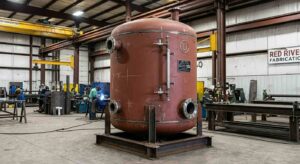
Make-Up Water Tanks: Design, Sizing, and Fabrication
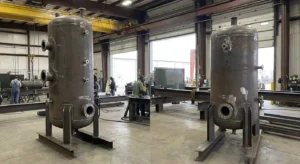
When to Spec Equalization Tanks for Industrial Systems