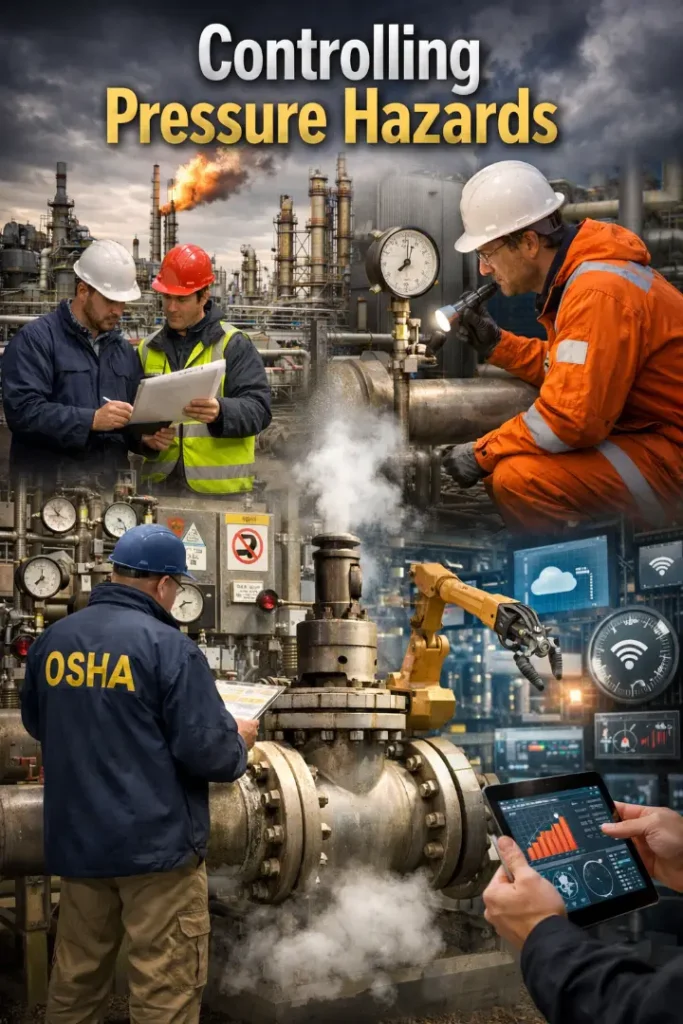
Pressure hazards pose serious risks in industrial environments, especially in oil, gas, and chemical sectors. This guide covers the most common causes like over-pressurization and corrosion and explains how to prevent failures using risk assessments, OSHA compliance, regular inspections, and modern technologies like IoT and automation. Plus, get expert tips on PPE, training, and emergency response planning to keep your operations safe and compliant.
Pressure Hazard Control: Prevent Failures with Proven Safety Practices
Controlling pressure hazards is critical to preventing system failures, injuries, and compliance violations in high‑risk industries like oil, gas, and energy production. These hazards arise when gas or liquid pressure exceeds a container’s safe limits, potentially causing catastrophic failures. This guide outlines key causes, risk assessment techniques, and modern prevention strategies to keep your pressure systems safe and compliant.
Key Sources of Pressure Hazards and How to Control Them
Identifying and mitigating pressure hazards in the workplace is a cornerstone of our practices at Red River. Common hazards include over-pressurization, corrosion, material fatigue, and improper operation or maintenance of pressure vessels. Our expertise in manufacturing pressure vessels stems from a deep understanding of these risks. This knowledge enables us to design solutions that exceed industry standards. Furthermore, we prioritize proactive prevention by implementing best practices to safeguard your operations and employees against these dangers.
For more insights on vessel risks, see our guide on pressure vessel hazards.
The Science Behind Controlling Pressure Hazards
Understanding the science behind pressure-related injuries is essential for developing effective safety techniques. At Red River, we delve into the physics of pressure dynamics, material technologies, and engineering principles to establish robust protection protocols. For instance, our team continually explores modern strategies to minimize risks associated with pressure vessel operations.
We leverage advancements in technology to ensure customers benefit from state-of-the-art solutions. In this way, we don’t just manufacture pressure vessels; we engineer long-term safety and reliability.
How to Conduct a Pressure Hazard Risk Assessment (Step-by-Step)
Conducting a Pressure Hazard Risk Assessment
A proper risk assessment begins with identifying all components under pressure, including pipes, vessels, and valves. Inspect for signs of corrosion, fatigue, or previous repairs. Evaluate pressure levels relative to design limits and check that relief systems are working properly. Tools like ultrasonic testing and visual inspections help validate system integrity. Document findings and flag any component exceeding tolerance thresholds.
Identifying Vulnerable Points in Your Facility
We focus on identifying vulnerable factors within your facility that may pose pressure-related risks. Therefore, our team’s expertise helps pinpoint areas that require immediate attention, preventing potential incidents before they occur.
Tools and Techniques for Risk Evaluation
By utilizing advanced equipment and innovative techniques, Red River conducts thorough risk evaluations. Learn more about our approach in pressure vessel failure mechanisms.
Controlling Pressure Hazards: Legal and Safety Regulations You Need to Know
OSHA Standards on Pressure Safety
Adhering to OSHA standards on pressure safety is fundamental to compliance and protection. We ensure that all our solutions meet these stringent requirements, offering peace of mind and reliability. For additional compliance guidance, see our ASME standards for pressure vessels.
Global Safety Protocols for Pressure Management
In addition, our expertise extends to global safety protocols for pressure management. This ensures that our products and services align with international safety practices, maintaining the highest standards of performance.
Compliance Checklist for Pressure Hazard Control
Red River provides a comprehensive compliance checklist to help clients navigate the complex landscape of pressure hazard management guidelines.
Preventive Measures for Controlling Pressure Hazards
Designing Safe Pressure Systems
Our approach to designing safe pressure systems is rooted in innovation and protection. We engineer systems that are not only efficient but inherently secure. Read more about objectives of pressure vessel design.
Routine Maintenance and Inspection Best Practices
Adopt best practices for routine maintenance and inspection to ensure long-term durability and safety. For techniques, see comprehensive guide to pressure vessel inspection.
Emergency Preparedness for Pressure Failures
In addition, our emergency preparedness strategies are designed to minimize risks and enable rapid response during critical situations.
Controlling Pressure Hazards: Innovative Technologies in Hazard Management
Cutting-Edge Tools for Pressure Monitoring
We integrate state-of-the-art equipment for pressure monitoring, enhancing safety and efficiency.
Automation in Pressure Safety Systems
Moreover, we leverage automation within pressure safety structures, bringing precision and reliability to our clients’ operations.
The Role of IoT in Pressure Hazard Prevention
The integration of IoT in pressure hazard prevention marks our dedication to leveraging advanced technology for enhanced safety.
Training and Awareness Programs
Developing Effective Training Modules for Staff
Our education modules are designed to empower staff with the know-how and abilities to control pressure dangers successfully.
Importance of Safety Culture in Preventing Pressure Hazards
We emphasize the importance of a strong safety tradition in preventing pressure hazards and fostering surroundings of continuous protection recognition.
Case Studies: Learning from Past Pressure-Related Incidents
Learning from past pressure-related incidents via case studies is critical to our approach, ensuring training is learned and improvements are made.
Personal Protective Equipment (PPE) for Pressure Safety
Essential PPE for Pressure Hazard Environments
At Red River, we apprehend the crucial position of Personal Protective Equipment (PPE) in safeguarding employees in pressure-risk environments. Our cognizance is on offering critical PPE that meets the highest requirements of safety and sturdiness.
Latest Innovations in Pressure Safety Gear
We live abreast of the latest innovations in pressure safety tools, ensuring our customers have admission to the most advanced and powerful defensive equipment available on the market.
Best Practices for PPE Usage and Maintenance
Our commitment extends to teaching clients first-rate practices for PPE utilization and maintenance, ensuring lengthy-time period effectiveness and safety.
Emergency Response to Pressure Hazard Incidents
Immediate Steps to Take During a Pressure Hazard Event
A prompt and effective response is critical. Guidance can be found in our pressure vessel safety resources.
Coordinating with Emergency Services
We emphasize the importance of coordinating with emergency offerings at some point of pressure threat incidents, ensuring a swift and coordinated reaction.
Post-Incident Analysis and Reporting
Post-incident analysis helps prevent future occurrences and improves safety protocols. Learn more in understanding pressure vessel failures.
Industry-Specific Pressure Hazard Management
Pressure Hazard Control in the Oil and Gas Industry
We specialize in pressure risk management tailored to oil and gas operations.
Managing Pressure Risks in Chemical Manufacturing
We provide expert answers for dealing with pressure dangers in chemical production, ensuring protection and compliance with enterprise standards.
Pressure Safety within the Construction Sector
Our expertise extends to making sure pressure protection within the construction region, wherein the integrity of pressure systems is essential for safe operations.
Client Success Stories and Testimonials
How Red River Mitigated Pressure Hazards for Clients
Discover how Red River has effectively mitigated pressure risks for our clients, showcasing our commitment to safety and excellence.
Client Feedback on Our Pressure Hazard Solutions
Hear without delay from our customers about their reports with our pressure chance answers and their effect on their operations.
Case Studies: Transforming Safety with Red River
Explore our case studies to peer how Red River is transforming safety in numerous industries via progressive pressure hazard control.
Ensure Safety and Compliance with Red River
Protect your operations, employees, and equipment from pressure hazards. Partner with Red River for expertly engineered pressure vessels, advanced monitoring solutions, and tailored safety strategies.
Contact us today to safeguard your facility and experience the Red River difference, where American-made quality meets unmatched expertise.
Frequently Asked Questions
1. What are the most common materials used in pressure vessel construction and why?
Common pressure vessel materials include carbon steel, stainless steel, and Hastelloy. Carbon steel is affordable and strong, while stainless resists corrosion in chemical environments. Material choice depends on the fluid’s temperature, pressure, and chemical composition, per ASME Section VIII standards.
2. How do pressure vessels handle extreme temperatures and pressures?
Modern vessels use reinforced materials, thermal insulation, and engineered joints to withstand extreme conditions. Safety features like expansion joints and pressure relief valves are integrated to manage stress and prevent rupture.
3. What are the key safety features integrated into modern pressure vessels?
Key safety features include pressure relief valves, rupture disks, corrosion allowance, and proper weld design. These are mandated by ASME codes to prevent catastrophic failures.
4. Can pressure vessels be custom-designed for specific industrial applications?
The frequency of pressure vessel inspections varies primarily based on industry rules and the unique utility. Generally, inspections should be conducted yearly or biennially. These inspections involve checking for signs of wear and tear, corrosion, and harm. Non-detrimental checking out techniques like ultrasonic testing, radiography, and magnetic particle inspection are typically used to assess the vessel’s circumstance without adverse it.
5. What is the lifespan of a pressure vessel and what factors influence it?
Yes, pressure vessels can be repaired, however, it has to be carried out with utmost caution and in compliance with enterprise requirements. The repair procedure commonly includes figuring out the broken area, making the floor, and then welding or patching it. It’s critical to apply materials and welding strategies compatible with the authentic construction. Post-repair, the vessel must go through rigorous checking to ensure its integrity and safety.
Key Takeaways:
- Pressure hazards can lead to catastrophic failures if not proactively controlled with risk assessments and routine maintenance.
- Common causes include over-pressurization, corrosion, fatigue, and improper operation of pressure vessels.
- Effective control measures include pressure relief systems, advanced monitoring tools, and strict adherence to OSHA and global safety standards.
- Regular inspections and PPE usage are essential for preventing injuries and equipment failure.
- Automation and IoT technologies are transforming pressure safety through real-time alerts and predictive analytics.
- A strong safety culture and ongoing training significantly reduce pressure-related incidents.
- Compliance checklists and emergency response plans ensure legal and operational readiness.
- Partnering with experienced providers ensures custom-engineered solutions that prioritize both performance and safety.
Related Blog Post
Which Materials Suit Make-Up Water Service?
How Big Should Make-Up Water Tanks Be?
Make-Up Water Tanks: Design, Sizing, and Fabrication
When to Spec Equalization Tanks for Industrial Systems
How Do Equalization Tanks Balance Flow?
- How to Conduct a Pressure Vessel Inspection in Water Treatment Facilities
- Safety Guidelines for Operating Water Pressure Vessels
- Standard Pressure Vessel Inspection Procedures in U.S. Plants
- Non-Destructive Testing (NDT) Methods for Pressure Vessel Safety
- OSHA pressure vessel: Safety Requirements for compliance
- Understanding Pressure Vessel Inspection Requirements
About Author